QakBot
QakBot is a banking trojan that infects the victim by hooking web browser DLLs, and redirecting them to malicious functions when functions like
HttpSendRequest() or HttpOpenUrl() are called from the browser.Even if TLS or HTTPS is enabled, the malware is still able to get the information as encryption of the data is done during the call to
HttpSendRequest() and not before. Therefore when QakBot hooks this function, it’s able to access all unencrypted data and send it to it’s own servers, before executing the normal procedure of HttpSendRequest()Dumping the files
When we first open the sample in Pestudio, we see that there are 2 executables embedded in it
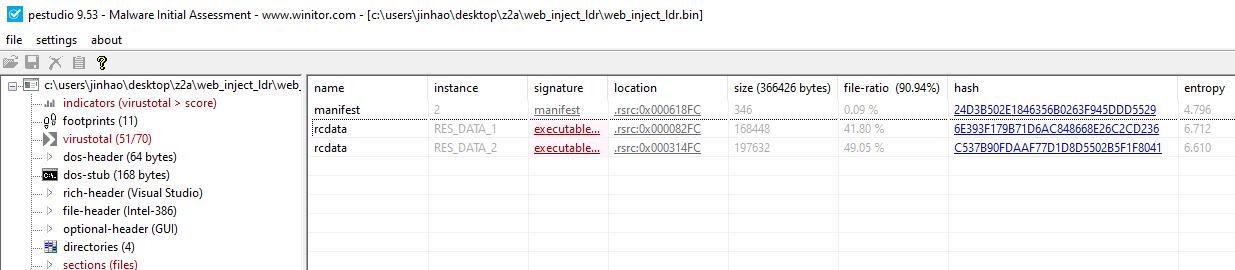
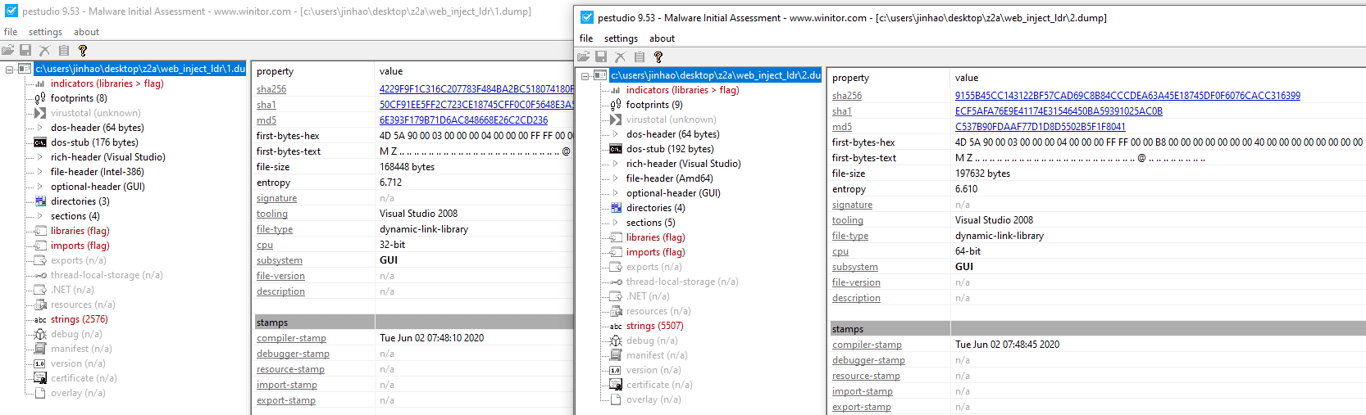
We dump these two files out for analysis. One of the files is a 64 bit DLL, while the other is a 32 bit DLL, both written in Visual Studio
Trampoline Refresher
“Cheating” a little, we already know that this malware sample does API hooking via trampolines. As a refresher, trampolines redirect the original function to a malicious one, and after executing the malicious actions, within the malicious function it jumps back to the original intended function.
In this example, on the left shows the original function of
InternetReadFile. On the right is after we have hooked it, and upon calling InternetReadFile, there is a jump to LoadLibraryA (or our malicious function). After executing LoadLibraryA or our malicious function, it jumps back to the InternetReadFile procedure at sub esp 38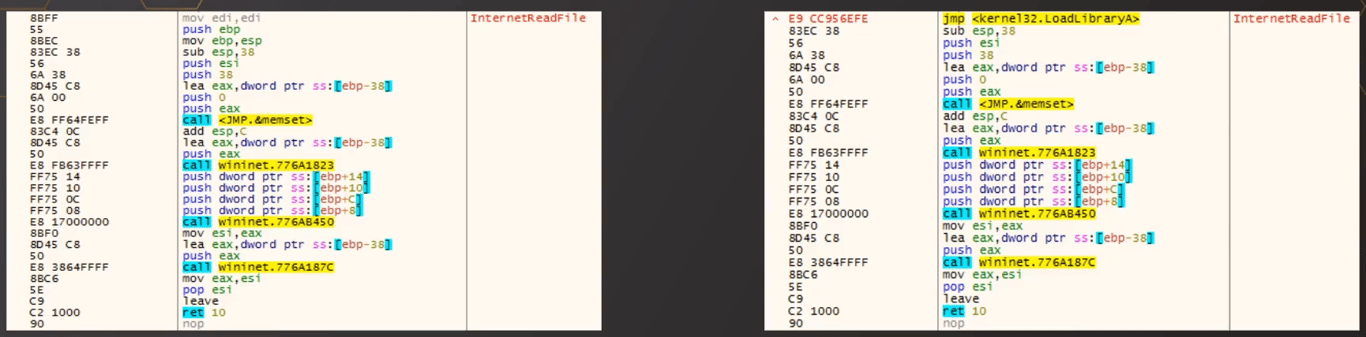
32 bit DLL analysis
We open the 32 bit DLL in IDA for static analysis
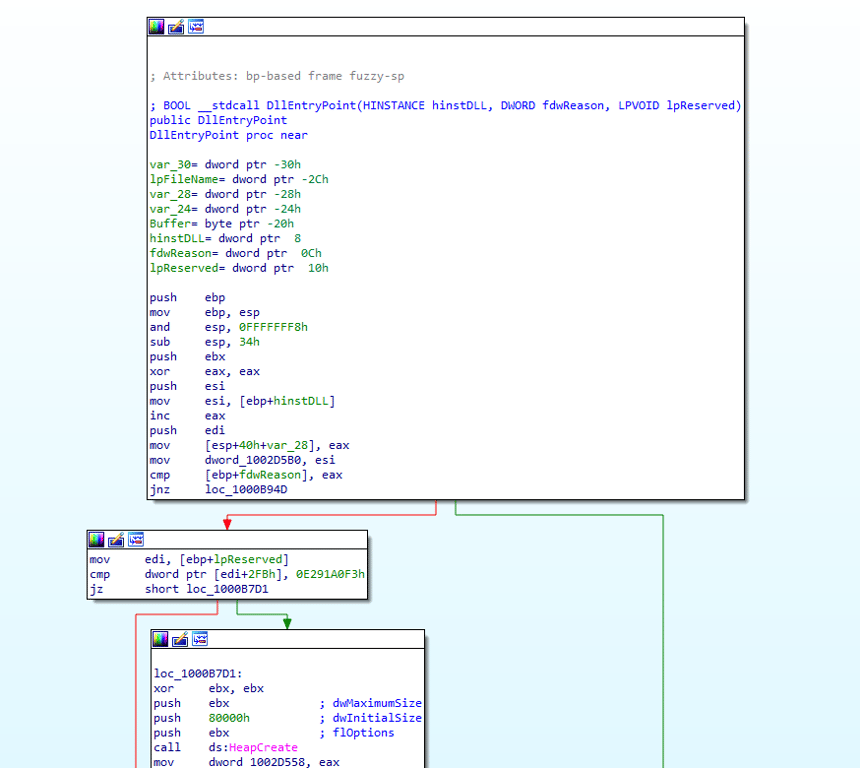
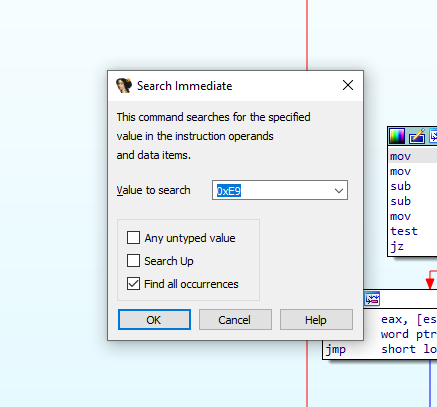
Since we know that it uses API hooking and trampolines, we want to find occurrences of
0xE9 which represents the jmp instruction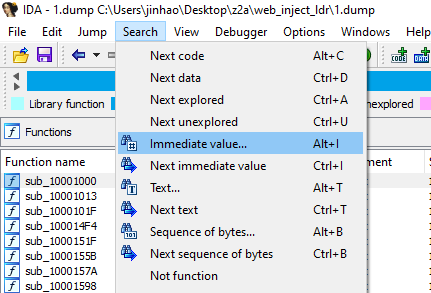
We see that 3 lines of code in 2 functions are writing or comparing to
0xE9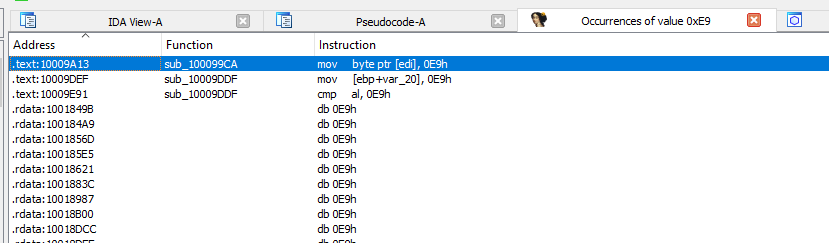
We go into procedure
10009DDF and we see a long complicated function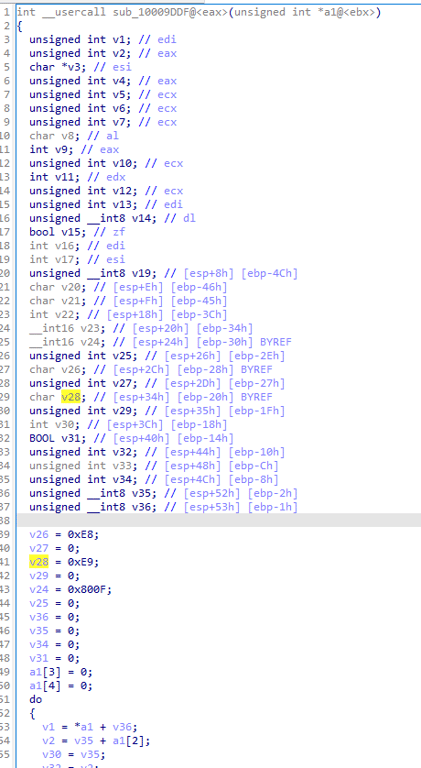
If we find references to this function and references to those, we eventually end up in this function.
It first get a variable from
sub_100147C5(*a2) and returns it to v4Then it calls
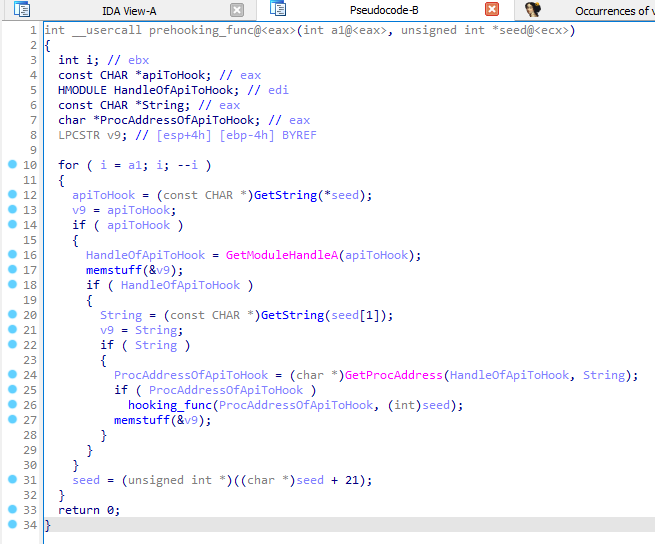
GetModuleHandleA(v4) to the get the handle on v4, before calling GetProcAddress to get the procedure address of v4This is likely the pre-hooking setup, where it’s finding the address of the function to hook, and
sub_10002D2E does the actual hooking.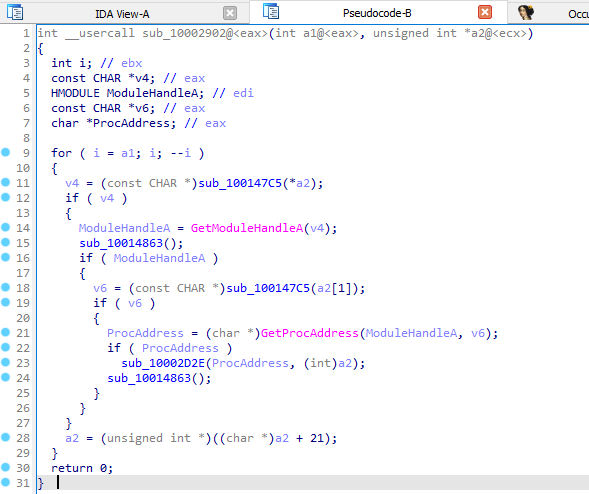
If we find references to this function, we see 5 of them. They each pass in data from different memory regions, and these eventually get passed to the pre-hooking function.
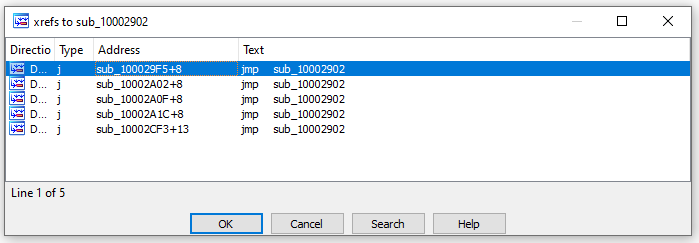
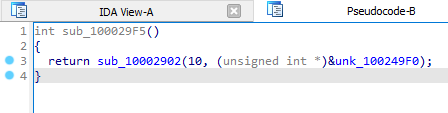
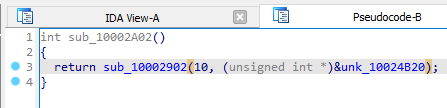
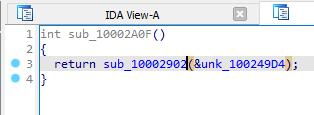
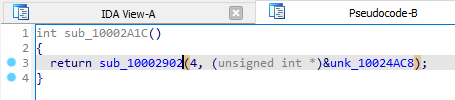
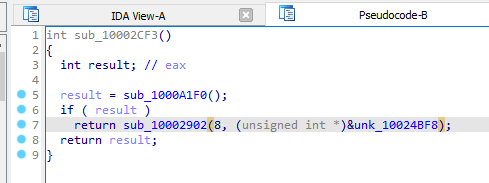
If we inspect one of the memory regions, we get a hex value. This will be passed to
sub_100147C5 in the pre-hooking function.sub_100147C5 looks to be doing some form of decryption or de-obfuscation due to the presence of a XOR operation, and iterating through an object at line 44.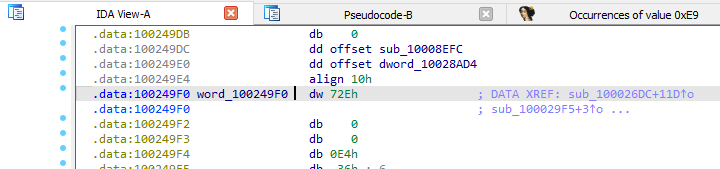
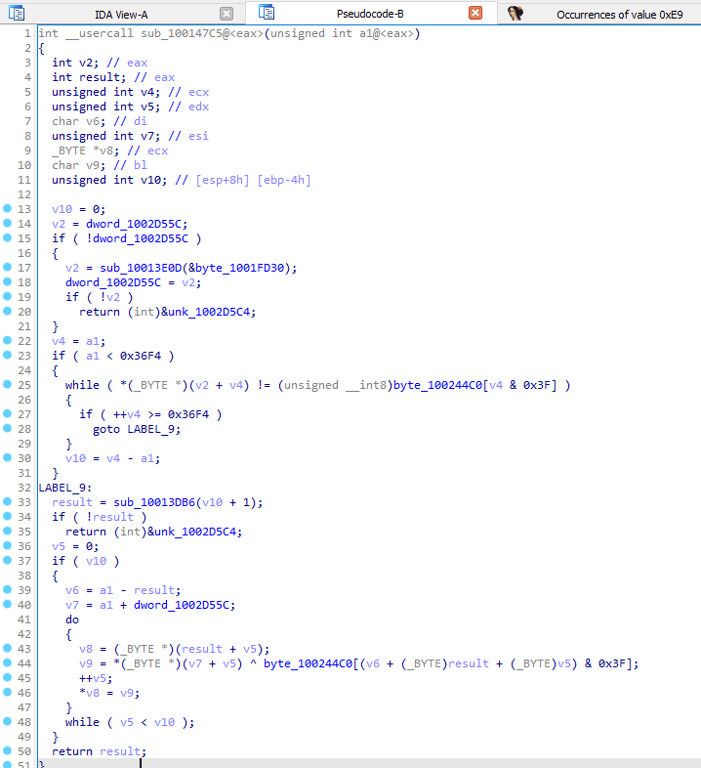
We can thus guess that the malware decrypts a string, gets the module handle and procedure address, and then performs hooking on those functions.
When we rename the pre-hooking function to it’s functionality, it will look something like this
 Made with Bullet